


Fertility Testing: What “Normal” Means & What Happens Next
If you’ve recently had fertility testing, it’s common to walk away thinking: “So… everything looks normal. Now what?”
For many patients, fertility test results bring relief—but also confusion. If nothing is “wrong,” why hasn’t pregnancy happened yet? And what does normal actually mean when it comes to fertility?
At Tennessee Fertility Institute (TFI), we believe fertility testing is not about checking boxes—it’s about understanding the full picture so we can personalize next steps. Here’s how to interpret fertility test results, what “normal” really means, and what typically happens next.
What Does Fertility Testing Include?
Fertility testing looks at a combination of factors that influence your ability to conceive. For many patients, this includes:
-
Hormone bloodwork (such as AMH, FSH, LH, estradiol, thyroid levels)
-
Ultrasound imaging to evaluate the ovaries and uterus
-
Semen analysis (when applicable)
-
Uterine or tubal imaging (HSG, SIS, or hysteroscopy in some cases)
Each test examines just one piece of a much larger puzzle.
What Does “Normal” Actually Mean?
In fertility care, normal does not mean “everything is perfect” or “pregnancy should be effortless.”
It means:
-
Your results fall within an expected reference range
-
No obvious red flags were identified on that specific test
-
There’s no immediate barrier requiring urgent intervention
Importantly, fertility tests are snapshots, not guarantees. They help estimate how the reproductive system is functioning—but they can’t predict whether or when pregnancy will occur on their own.
Common Tests—and How to Think About “Normal” Results
Ovarian Reserve Testing (AMH, FSH, Antral Follicle Count)
These tests give insight into how the ovaries are responding and how many eggs may be available—not whether pregnancy will happen naturally or with treatment.
A “normal” result means ovarian reserve is within an expected range for age, but it doesn’t assess egg quality or rule out the need for treatment.
Ovulation and Hormone Levels
Hormone testing helps confirm whether ovulation is occurring and whether hormones are well‑timed and balanced.
“Normal” hormone levels suggest ovulation is possible, but ovulation alone doesn’t always equal conception—especially if timing, egg quality, or sperm factors come into play.
Uterine and Tubal Evaluation
Imaging tests help identify structural issues, such as fibroids, polyps, or blocked fallopian tubes.
Normal findings mean the uterus and tubes appear open and supportive—but implantation and pregnancy still depend on multiple downstream factors.
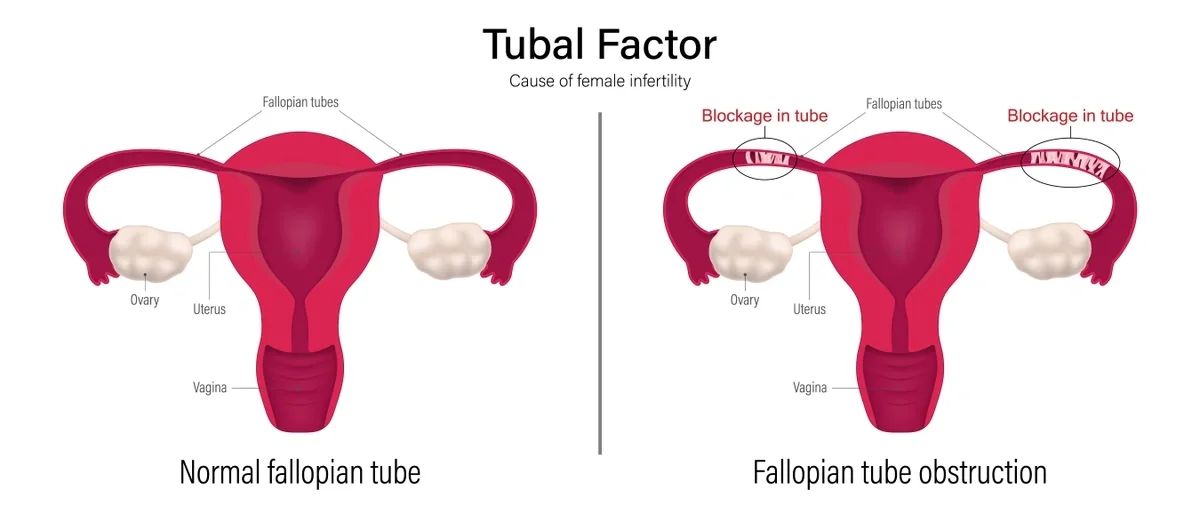
Illustration of tubal factor infertility
Semen Analysis
A semen analysis evaluates sperm concentration, movement, and shape.
Even when results are within normal ranges, pregnancy timelines can vary depending on how all factors interact together.
Why You Can Have “Normal” Results and Still Struggle to Conceive
This is one of the hardest—and most common—realizations in fertility care.
Some reasons include:
-
Unexplained infertility, where testing doesn’t identify a single cause
-
Egg quality issues that aren’t visible on routine testing
-
Timing-related challenges
-
Subtle hormone pattern differences
-
Age-related changes that don’t always show up as abnormal labs
Unexplained infertility doesn’t mean “nothing is wrong.” It simply means current tests haven’t pinpointed one clear reason—and there are effective treatment options.
What Happens After Fertility Testing?
Once testing is complete, your care team looks at the entire picture, not just individual numbers.
Next steps may include:
-
Continued attempts to conceive naturally with optimized timing
-
Ovulation induction and timed intercourse
-
Additional testing if needed
A treatment plan isn’t chosen because a result is “abnormal” or “normal”—it’s chosen based on how to give you the best chance moving forward.
Fertility Testing Is a Starting Point—Not the Finish Line
It’s understandable to expect fertility testing to provide clear answers. Sometimes it does. Often, it provides clarity in a different way—by helping rule certain things out and guiding the next step.
At TFI, we focus on context over labels. “Normal” results don’t dismiss your experience, delay care, or invalidate your concerns. They simply help narrow the path forward.
Still Have Questions?
If you’re unsure what your fertility test results mean—or what your options are next—we encourage you to talk with your care team. Asking “why” is not only okay; it’s important.
No matter what your results show, you don’t have to interpret them alone.
Ready to talk through your results or explore next steps?
Schedule a consultation with our team—we’re here to guide you with clarity, compassion, and personalized care.