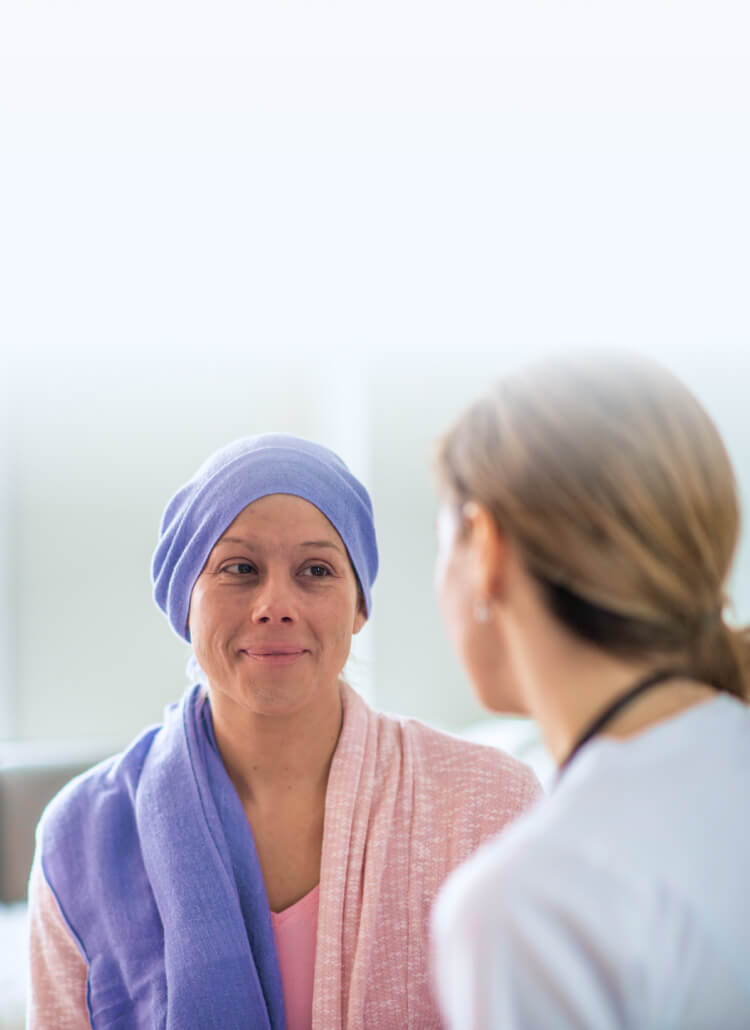
Oncofertility Services in Tennessee
Don’t let a cancer diagnosis get in the way of your fertility goals. We offer counseling, treatment, and support to help you explore the possibility of preserving your fertility for the future.
Request a Consult
Fertility Preservation Options
Depending on your reproductive health, cancer treatment plan, and timeline, you may have several options for preserving your fertility. Your fertility specialist and oncology team can work together to determine which options may be appropriate before treatment begins.
Sperm Freezing
Sperm freezing is typically completed before cancer treatment begins. One or more semen samples are collected, analyzed, processed, and cryopreserved for potential future use with fertility treatments such as intrauterine insemination or in vitro fertilization.
If sperm cannot be obtained through ejaculation, surgical sperm retrieval may be an option in some circumstances. Your fertility specialist can recommend an approach based on your individual needs and treatment timeline.
Egg Freezing
Egg freezing allows eggs to be retrieved and cryopreserved before cancer treatment for potential use in the future. The process generally involves ovarian stimulation with fertility medications, followed by egg retrieval and vitrification, a rapid freezing technique used to preserve the eggs.
Because the process takes time to complete, it is important to involve a fertility specialist as early as possible after a cancer diagnosis. Your fertility and oncology teams can coordinate care based on when your cancer treatment needs to begin.
Embryo Banking
Embryo freezing is another established fertility preservation option. Eggs are retrieved and fertilized with sperm through IVF, and resulting embryos are cryopreserved for potential future use.
Like egg freezing, this process requires ovarian stimulation and egg retrieval before embryos can be created and frozen. Your fertility specialist can work with your oncology team to determine whether embryo freezing is appropriate based on your treatment plan, timeline, and family-building goals.