


The Trigger Shot in Fertility Treatment: How It Works, Timing, and Why It Matters
A trigger shot is a precisely timed hormone injection that finishes maturing your eggs and sets ovulation in motion, so your care team can schedule your egg retrieval or insemination with exact timing. It's often the final — and most time-sensitive — step of a treatment cycle.
If you're approaching this point in your cycle, you've likely spent a week or more on stimulation medications, with ultrasounds and bloodwork along the way. The trigger shot is the moment all of that preparation comes together. It's normal to feel both excited and nervous about getting it exactly right. This guide walks through what the trigger shot does, the different types, why timing is so important, and what to expect afterward — so you can approach it with confidence.
What a trigger shot actually does
In a natural menstrual cycle, your brain signals ovulation by releasing a surge of luteinizing hormone (LH). That surge does two things: it tells the egg to complete its final stage of maturation, and it loosens the egg from the follicle wall so it can be released. According to the American Society for Reproductive Medicine (ASRM), ovulation typically follows about 32 to 40 hours after the LH surge begins.
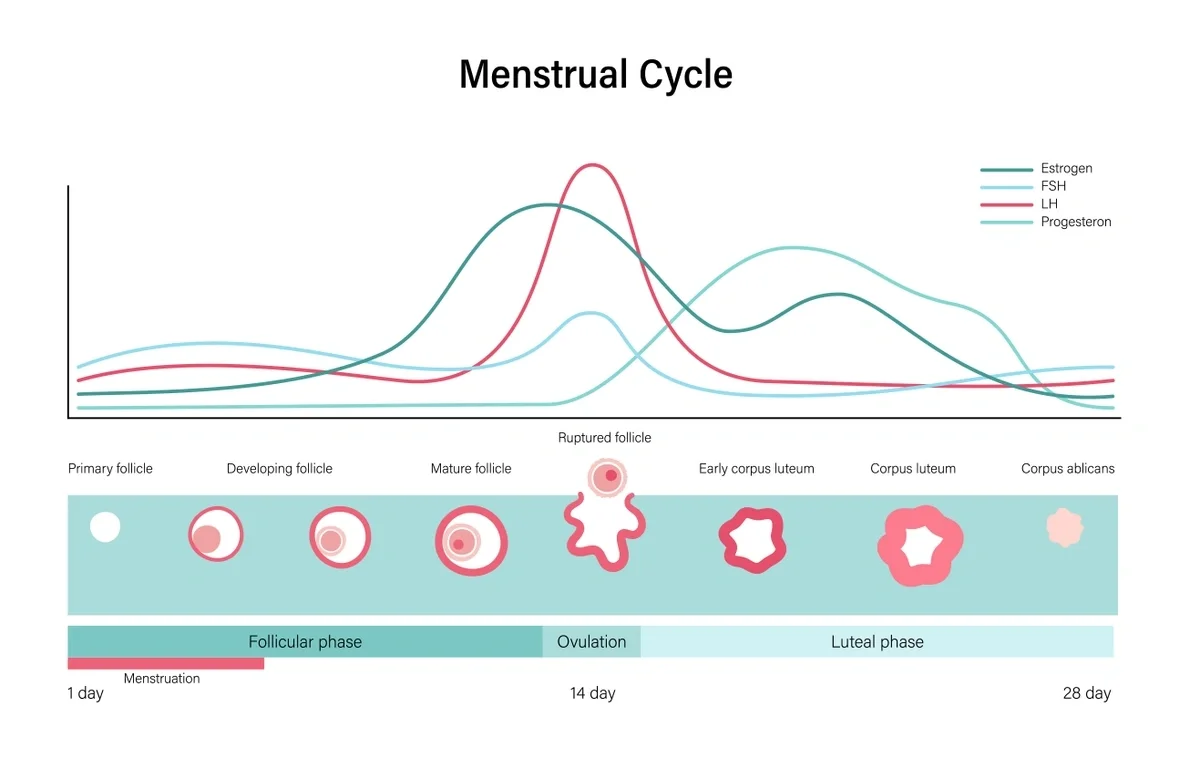
During fertility treatment, the stimulation medications you take are designed to grow several follicles at once. In an IVF cycle, you’ll also take a separate suppression medication that keeps your ovaries from releasing those eggs too early — so none are lost before your retrieval. IUI and timed-intercourse cycles typically don’t include that suppression step, which means there’s a genuine possibility of ovulating on your own before the planned timing. Either way, the trigger shot is what hands the schedule back to your care team: it replaces your natural LH surge with a dose you and your physician control, so your eggs finish maturing on a known timeline instead of releasing on their own. It’s also why close monitoring is so important in IUI and timed-intercourse cycles — your team tracks your follicles to deliver the trigger at exactly the right moment.
In short, the trigger shot answers a single, crucial question: exactly when will your eggs be ready?
Why timing is everything
Most fertility medications have some flexibility — a dose taken a little early or late usually isn't a problem. The trigger shot is the exception. It has a narrow, exact window, and your nurse will give you a specific time, often down to the minute.
Here's why that precision matters:
-
Too early, and the eggs may not be fully mature, which can lower the number of usable eggs retrieved.
-
Too late — or a missed dose — and your body may ovulate on its own before retrieval, releasing the eggs where they can't be collected. In some cases this can lead to a cancelled cycle.
For IVF and egg freezing, your egg retrieval is almost always scheduled for about 34–36 hours after your trigger shot — timed deliberately to collect the eggs when they're mature but just before your body would release them. This is why so many patients set multiple alarms and have a partner double-check the time.
Trigger timing at a glance
|
Treatment |
When the trigger is given |
What happens next |
|
IVF / Egg Freezing |
~34–36 hours before egg retrieval |
Eggs are collected in a short procedure just before natural ovulation would occur. |
|
IUI (intrauterine insemination) |
Insemination timed ~24–36 hours after the trigger |
Prepared sperm is placed in the uterus to meet the egg around ovulation. |
|
Timed intercourse |
Intercourse planned for the ~24–36 hour window after the trigger |
Intercourse is timed to coincide with ovulation. |
|
Ovulation itself |
— |
Generally occurs ~36–40 hours after the trigger shot. |
Your exact timing is set by your TFI physician based on your follicle size, hormone levels, and treatment plan. Always follow the specific instructions from your care team over any general timeframe.
The three types of trigger shots
Not all trigger shots are the same. Your physician chooses the type — and the dose — based on how your ovaries have responded, your risk of complications, and your overall treatment plan. There are three common approaches.
|
Type |
How it works |
Often used for |
OHSS consideration |
|
hCG trigger (Ovidrel, Novarel, Pregnyl) |
hCG closely mimics LH and directly drives final egg maturation. It's the long-standing standard trigger. |
Most IVF, IUI, and timed-intercourse cycles. |
hCG stays active in the body longer, which can raise the risk of OHSS in high responders. |
|
GnRH-agonist trigger (Lupron / leuprolide) |
Instead of acting like LH, Lupron prompts your own pituitary gland to release a short, natural surge of LH. |
Patients at higher risk of OHSS — often paired with a "freeze-all" plan where embryos are frozen for a later transfer. |
Substantially lowers OHSS risk — ASRM notes that using leuprolide instead of hCG can help prevent OHSS. Only works in certain (antagonist) protocols. |
|
Dual trigger (hCG + Lupron) |
Combines a GnRH agonist with a (often lower) dose of hCG to capture benefits of both. |
Selected patients — for example, to support egg maturity or yield while managing risk. |
A middle-ground strategy; research shows it does not eliminate OHSS risk the way an agonist-only trigger can, so it's chosen case by case. |
The "right" trigger isn't the same for everyone — it's one of the clearest examples of how an individualized protocol protects both your results and your safety. Patients with a high follicle count, a high AMH, or PMOS (formerly referred to as PCOS) are watched especially closely, because they're more prone to overstimulation. Matching the trigger to your response is part of how your TFI team keeps your cycle both effective and safe.
How you'll give yourself the trigger shot
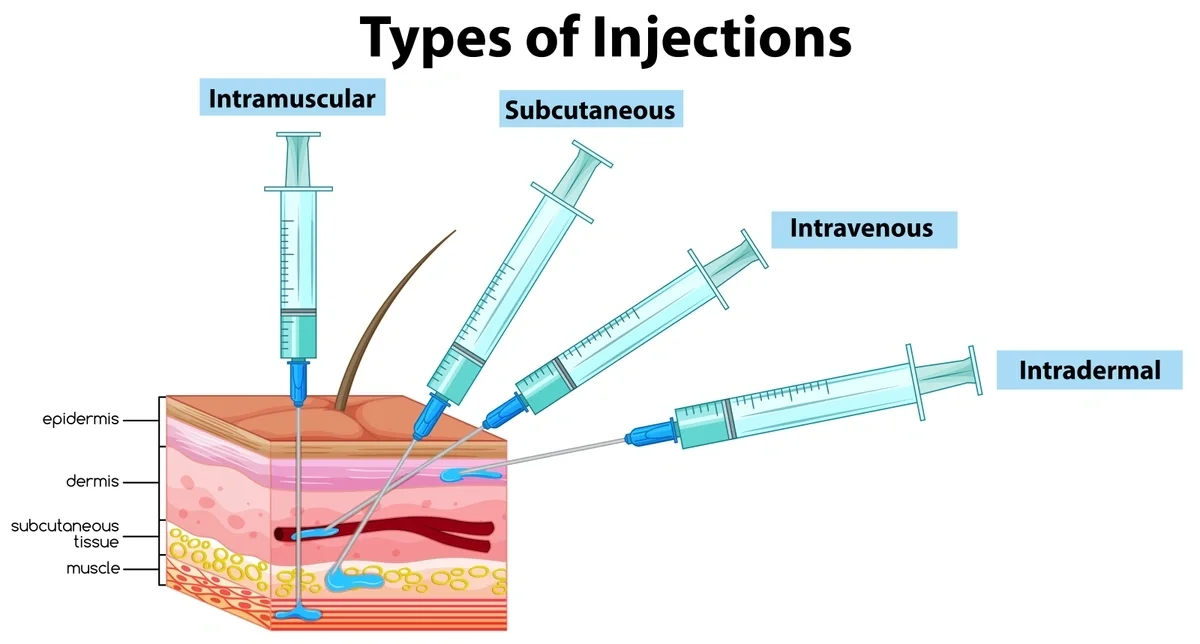
The trigger shot is usually a small injection you give at home, just under the skin (subcutaneous) or, less commonly, into the muscle (intramuscular) — a member of your care team will instruct you exactly which, and where. A few things that help it go smoothly:
-
Confirm your exact time. Your care team will give you a precise time to inject. Write it down and set at least two alarms.
-
Prep in advance. Some triggers come as a ready-to-use pen; others need to be mixed first. Know which you have before the evening of your injection.
-
Don't panic over small things. A little bleeding, a small bubble, or mild stinging is normal.
If you think something went wrong — you missed the time, weren't sure the full dose went in, or used the wrong medication — call your TFI care team right away, day or night. Timing matters too much to guess, and there are often options to adjust. Reach Tennessee Fertility Institute (TFI) at (615) 721-6250.
What to expect afterward: side effects and safety
Most people tolerate the trigger shot well. In the day or two afterward, you may notice:
-
Mild bloating or a feeling of fullness as your ovaries are at their largest
-
Tenderness, redness, or a small bruise at the injection site
-
Mild pelvic discomfort or a sense of pressure
These are generally short-lived. The more important thing to understand is a less common but serious condition called OHSS.
Ovarian hyperstimulation syndrome (OHSS)
OHSS is an excessive response to the medications used to grow eggs, in which the ovaries swell and fluid can shift into the abdomen. Mild symptoms are relatively common — ASRM reports that about one in three people experience some mild OHSS during ovarian stimulation for IVF — while severe OHSS is uncommon, estimated by SART at roughly 0.4% to 2% of cycles. Risk is higher for patients with PMOS/PCOS, a high AMH, or a large number of follicles — which is exactly why trigger choice (like a Lupron or dual trigger) and close monitoring matter so much.
Contact your TFI team promptly if, in the days after your trigger or retrieval, you have rapid weight gain, significant abdominal swelling or pain, nausea or vomiting, shortness of breath, or notably reduced urination. Most OHSS is mild and self-limited, but these signs deserve a same-day call.
One more reason not to test early
Because the most common trigger shots contain hCG — the same hormone a home pregnancy test detects — testing too soon after your trigger can produce a false positive that simply reflects leftover trigger medication, not pregnancy. hCG can linger in your system for several days. As a result, your care team will often administer a blood test (beta hCG) on a specified date, which will provide a more reliable answer.
A quick word on "natural" and "minimal" approaches
You may come across clinics that emphasize natural-cycle or minimal-stimulation IVF. Even in those approaches, a trigger shot is typically still used to time egg maturation precisely — the trigger isn't what distinguishes one philosophy from another. What matters most is that your protocol, including your trigger, is matched to your body, your goals, and your safety. At TFI, that individualized approach is the standard for every patient, whether your plan calls for conventional stimulation or a gentler one.
Frequently asked questions about the trigger shot
When do you ovulate after a trigger shot?
Ovulation generally occurs about 36 to 40 hours after the trigger shot. For IVF, your egg retrieval is scheduled for roughly 34–36 hours after the trigger — deliberately timed to collect your eggs just before they would be released.
Does the trigger shot hurt?
Most people find it very manageable. It's usually a small subcutaneous injection, similar to the other fertility medications you've likely already been taking. Mild stinging, a small bruise, or tenderness at the site is normal.
What happens if I take the trigger shot late or miss the exact time?
Timing is the most important part of the trigger, so don't try to problem-solve on your own. Call your TFI care team right away — there are often ways to adjust, and they'll tell you the best next step. Taking it too late risks ovulating before your retrieval.
Can I take a home pregnancy test after my trigger shot?
It's best to wait for the blood test your clinic schedules. Because most trigger shots contain hCG — the hormone pregnancy tests detect — testing at home too soon can show a false positive from the medication itself rather than a true pregnancy.
What's the difference between an hCG trigger and a Lupron trigger?
An hCG trigger (such as Ovidrel) acts like your natural LH to mature the eggs and is the long-standing standard. A Lupron (GnRH-agonist) trigger instead prompts your own body to release a surge of LH, and it substantially lowers the risk of OHSS — but it only works in certain protocols and is often paired with freezing embryos for a later transfer. Your physician recommends the right one for your situation.
Why does my friend's trigger shot protocol look different from mine?
Trigger type, dose, and timing are personalized. Two patients at the same clinic can have different triggers based on how their ovaries responded, their hormone levels, and their risk of overstimulation. A different plan isn't a worse plan — it's a tailored one.
Can a trigger shot fail?
It's uncommon, but occasionally the body doesn't respond as expected (sometimes called an "empty follicle" situation). Clinics monitor for this, and your care team can discuss options if it happens. Following your exact timing and instructions is the best way to reduce the risk.
Do I always need a trigger shot?
Not in every case, but it's a standard part of most IVF, IUI, and many timed-intercourse cycles because it lets your care team time the next step with precision. Your physician will tell you whether your specific plan includes one.
The bottom line
The trigger shot is a small injection that carries a lot of importance: it finishes maturing your eggs and lets your care team time your retrieval or insemination exactly. Understanding what it does — and why the timing and the type are chosen so carefully — can take a lot of the anxiety out of this step.
If you're exploring fertility treatment in Nashville, Franklin, or the surrounding Middle Tennessee communities — including Mount Juliet, Hendersonville, Smyrna, and across Davidson and Williamson counties — the team at the Tennessee Fertility Institute is here to build a plan that's tailored to you, every step included. Request a consultation or call us at (615) 721-6250 to get started.