

Donor Egg IVF in Tennessee: A Recipient's Guide to the Journey
Donor egg IVF is a fertility treatment in which eggs from a healthy, screened donor are fertilized with sperm and the resulting embryo is transferred to a recipient — the person who will carry the pregnancy and become the parent. It's one of the most effective paths to parenthood in all of reproductive medicine, and for many people it's the step that finally turns years of trying into a healthy pregnancy.
If your care team has raised the idea of using an egg donor, it's normal to feel a mix of hope, grief, and a hundred questions. This guide walks through how the process actually works for recipients at Tennessee Fertility Institute — medically, emotionally, and practically — so you can decide, at your own pace, whether it's the right path for you.
Who donor egg IVF is for
Donor eggs can help in a range of situations. People most often consider this path when:
-
Egg quantity or quality has declined, often due to age or diminished ovarian reserve
-
Premature or early menopause / primary ovarian insufficiency has reduced or ended egg production
-
Previous IVF cycles have resulted in poor egg or embryo quality
-
A heritable genetic condition could be passed to a child through the egg
-
The ovaries have been removed or affected by surgery, cancer treatment, or another medical cause
-
A single father or a male same-sex couple is building a family (typically alongside a gestational carrier)
The American Society for Reproductive Medicine (ASRM) describes these same core indications in its patient resource on egg donation. If you're exploring donor eggs because of age specifically, our overview of how age affects fertility gives helpful context on why donor eggs become part of the conversation.
Where donor eggs come from
Recipients at TFI generally have two routes, and your physician will help you choose based on your goals, timeline, and budget:
-
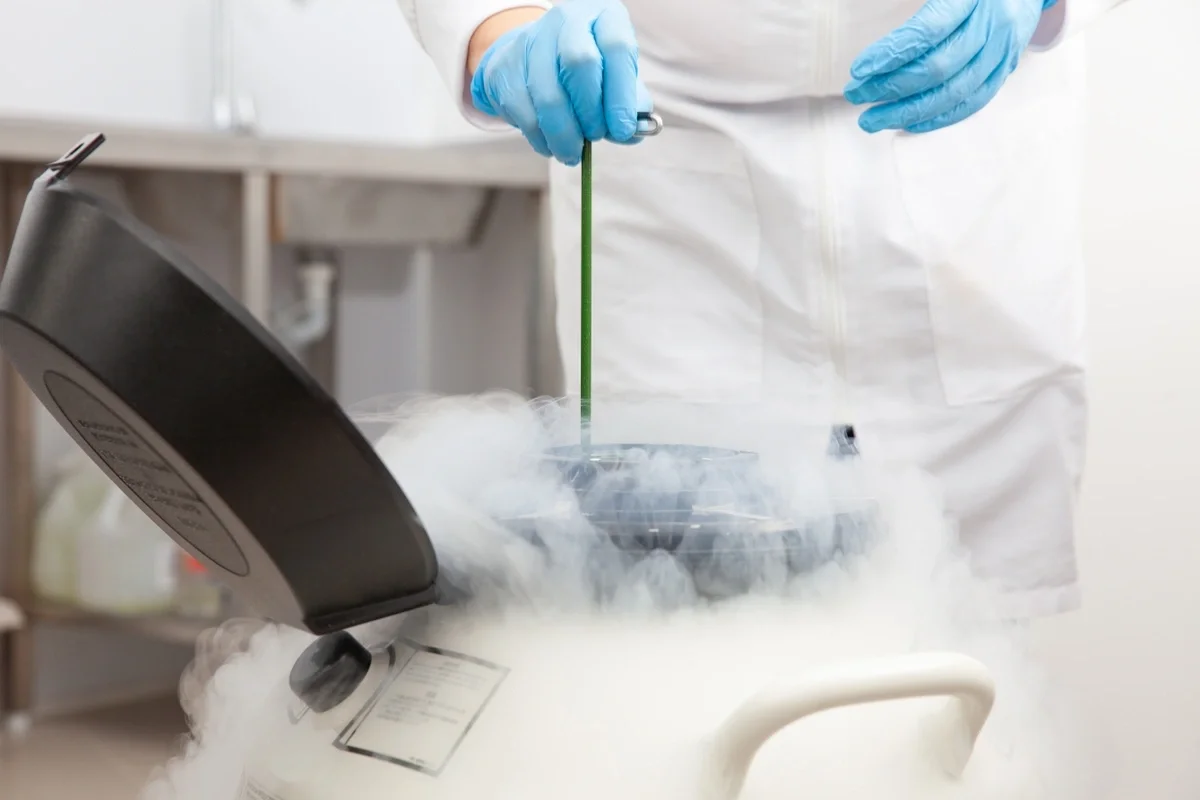
Frozen donor eggs from an egg bank. Eggs are already retrieved, screened, and cryopreserved, ready to be thawed and fertilized. This route is usually faster and more predictable, and it removes the need to synchronize two people's cycles.
-
A fresh cycle with a known or recruited donor. Some recipients use eggs from a friend or family member, or match with a recruited donor and coordinate a fresh retrieval. This path takes longer and involves syncing the donor's and recipient's cycles.
How egg donors are screened
This is often the question recipients care about most, and the reassurance is real: egg donors go through rigorous, regulated screening before a single egg is used.
-
Infectious disease screening follows U.S. Food and Drug Administration (FDA) rules for "donor eligibility determination," which exist to minimize the risk of transmitting infection.
-
Physical, genetic, and psychological screening follows ASRM's professional guidance, covering the donor's own health history and genetic carrier status.
ASRM lays out both layers — the FDA portion and the ASRM portion — in its 2024 guidance on gamete and embryo donation. ASRM also recommends that donors generally be between 21 and 34 years old, which is part of why donor egg success rates are so strong. No screening process is perfect — the same small background risks that exist in any pregnancy still apply — but reputable programs screen thoroughly to keep those risks as low as possible.
The recipient journey, step by step
Every path is a little different, but most recipient cycles follow the same arc.
1. Consultation and a "prep" cycle. You'll meet with your physician to review your history, confirm your uterus is ready to carry a pregnancy, and talk through your options. Many recipients do a short preparatory cycle first, so the team can confirm your uterine lining responds well to medication before matching begins.
2. Matching with a donor. With a frozen bank, you select from available donor profiles. With a fresh cycle, you and your donor are matched and she completes her screening. Recipients always choose the donor; no eggs are used until the donor has cleared screening.
3. Preparing your uterus (and, for fresh cycles, synchronizing). You'll take medication — typically estrogen, then progesterone — to build a receptive uterine lining. In a fresh cycle, your cycle is synchronized with the donor's so the timing lines up. With frozen eggs, there's nothing to synchronize, which simplifies scheduling.
4. Fertilization. The donor eggs are fertilized in the lab with your partner's sperm or donor sperm. Because many donor eggs are frozen and then thawed, fertilization is usually done with intracytoplasmic sperm injection (ICSI), where a single sperm is injected directly into each egg.
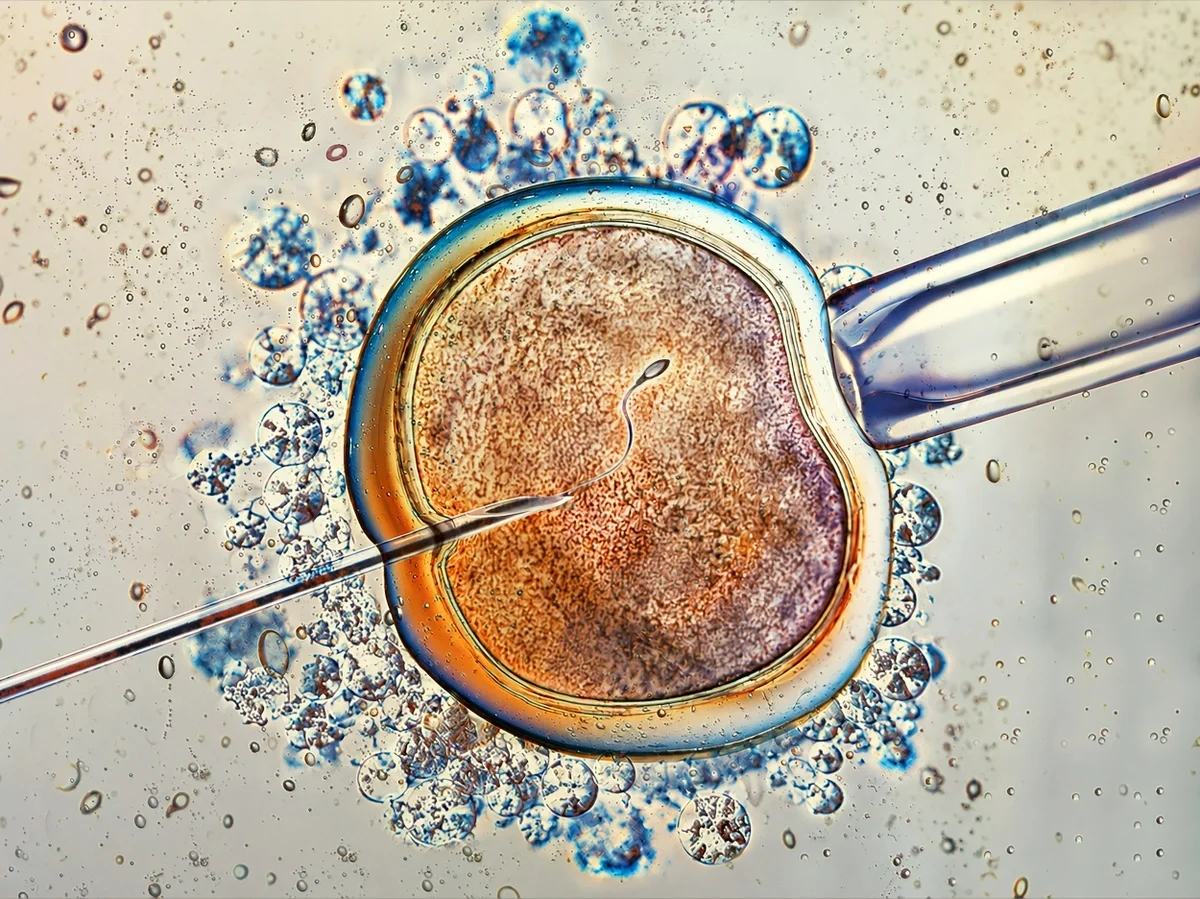
Illustration of ICSI procedure
5. Embryo transfer. When an embryo is ready, your physician transfers it to your uterus in a quick, ultrasound-guided procedure — the same frozen embryo transfer step used throughout IVF. ASRM guidelines favor transferring a single embryo to avoid the added risks of twins.
6. Pregnancy test and beyond. About two weeks later, a blood test checks for pregnancy. From there, your care continues much like any other pregnancy, with early monitoring before you transition to your OB.
For context on the medications involved at several of these steps, see our introduction to IVF medications.
What success looks like
Here's the part that surprises many recipients: donor egg IVF has some of the highest success rates in all of fertility care, and — unlike IVF with your own eggs — those rates stay steady regardless of your age.
Nationally, ASRM reports a live birth rate of roughly 53.5% per embryo transfer across all egg-donor cycles. Because the egg comes from a young, healthy donor, a recipient in her mid-40s has outcomes similar to a recipient in her 30s — which is why national registries report donor egg results across all ages together rather than breaking them down by recipient age.
A few honest caveats worth keeping in mind:
-
These are national averages, not a prediction for any one person. Your own chances depend on your health, your uterus, sperm quality, and embryo quality.
-
Success per transfer assumes you reach the transfer step; the full journey can involve more than one transfer.
-
For recipients over 45, ASRM recommends extra medical evaluation (including a cardiac check) before pregnancy, since carrying later in life carries its own considerations.
Your TFI physician can talk you through what the figures mean for your situation.
The emotional side of using a donor
Choosing donor eggs can stir up real feelings — grief for the genetic connection you imagined, questions about identity, uncertainty about whether and how to tell a future child. All of that is normal, and none of it means this isn't the right path.
A few things recipients often find helpful:
-
Counseling or a psycho-educational consultation. Many programs include this, and it's not a hurdle — it's space to process the decision with someone who understands it.
-
Thinking through disclosure early. There's no single right answer, but it helps to consider how you might talk about your child's origin story over time.
-
Remembering the biology of connection. As the person who carries and nurtures the pregnancy, you shape your baby's development in profound ways from the very start.
FAQs
Is the baby biologically related to me if I use a donor egg? The child won't share your genetic material, but you carry the pregnancy, give birth, and are the legal and birth parent. If your partner's sperm is used, the child is genetically related to them. Many recipients find that the experience of pregnancy creates a deep, lasting bond.
How are egg donors screened? Donors undergo FDA-regulated infectious disease screening plus ASRM-guided physical, genetic, and psychological screening before any eggs are used.
Does my age affect donor egg success rates? Much less than with your own eggs. Because the egg comes from a young donor, success rates stay relatively stable across recipient ages, which is why national data is reported across all ages together.
Should I use fresh or frozen donor eggs? Frozen eggs from a bank are usually faster and more predictable; a fresh cycle with a known or recruited donor takes longer but suits some families better. Your physician will help you weigh the trade-offs.
The Bottom Line
Donor egg IVF is one of the most successful and well-established paths to parenthood — and for many people, it's the one that works. It can also bring up real emotions, and you don't have to sort through them alone. The team at Tennessee Fertility Institute will walk with you through every step, from choosing a donor to holding your baby.
Ready to talk it through? Schedule a consultation with Tennessee Fertility Institute today.